
2026 Galaxy Community Conference (GCC2026)
The annual gathering of the Galaxy Community with opportunities to hear latest developments, get training, and meet everyone involved.
GCC2026 Highlighted Talks
The highlighted talks at GCC2026 bring together distinguished researchers and community leaders to share work, perspectives, and ideas that matter across the Galaxy ecosystem. From live demonstrations of new platform capabilities to keynote science, community-wide updates, and open discussion, these sessions offer a compelling look at where Galaxy stands today and where it is going.
Galaxy Live! is GCC’s signature product demonstration — a live, on-stage reveal of what’s new in Galaxy. Think less lecture, more launch event. The presenter works directly in the platform, unveiling new features and capabilities in real time, showing how they work, and demonstrating what becomes possible with them.
This session is where the community gets its first look at the tools and workflows that will define the next year of Galaxy development. Whether you’re a longtime user curious about what’s changed or someone evaluating Galaxy’s capabilities for the first time, Galaxy Live! gives you an immediate, concrete sense of what the platform can do — no prior knowledge required.
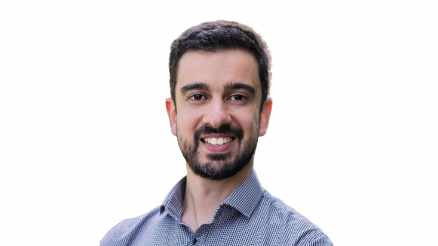
Rayan Chikhi is a computer scientist and group leader at Institut Pasteur, where he heads the Sequence Bioinformatics research group in the Department of Computational Biology. His research focuses on algorithms and data structures for large-scale analysis of biological sequences, with particular emphasis on genome assembly, k-mer-based methods, and scalable indexing of massive sequencing collections. Dr. Chikhi received his PhD in Computer Science from ENS Rennes in 2012. After a postdoctoral fellowship at Penn State University, he joined CNRS and later founded his research group at Institut Pasteur in 2019. He is the recipient of an ERC Consolidator Grant (IndexThePlanet, 2023-2028). He initiated the Logan project, an assembly and index of petabase-scale public DNA and RNA sequencing data, then used it to search the data at scale to discover new viruses and plastic-degrading enzymes.
The Galaxy Community Update is the annual state-of-the-ecosystem address — a comprehensive look at everything that has happened in the Galaxy world over the past year and a forward-looking preview of what is coming next. The session covers major platform developments, new and evolving integrations, growth across the global community, and shifts in how Galaxy is being deployed and used at scale.
Beyond the technical, this session also touches on Galaxy’s governance, key institutional partnerships, and the collaborative initiatives shaping the platform’s direction. It is the single best place to get oriented on the full scope of the Galaxy project, whether you are deeply embedded in the community or just beginning to explore what Galaxy can offer your work.

The Panel Discussion is one of the most anticipated sessions at GCC — a structured but open conversation on the topics the community is wrestling with most. A group of panelists drawn from research, development, and community leadership will engage with questions around the real challenges of data-intensive science: scaling analyses, sustaining infrastructure, enabling reproducibility, and building the collaborative frameworks that modern research demands.
The format is intentionally interactive. Audience questions and contributions are central to the session, not an afterthought. Topics shift from year to year based on what the community brings, making this one of the most authentic and unpredictable sessions on the program.
Galaxy in Research showcases the science that Galaxy makes possible. These community-submitted talks feature researchers presenting work where Galaxy played a central role — spanning genomics, proteomics, climate science, imaging, and beyond. The session is a testament to the breadth of what the platform supports and the caliber of research being done with it.
Each talk offers a window into how a real research team approached a hard problem, which tools and workflows they built or relied on, and what they discovered as a result. Taken together, they paint a compelling picture of Galaxy as a platform for serious, reproducible, large-scale science. If your group has done significant work using Galaxy, we encourage you to submit an abstract and share it with the community.