Welcome to the climate science community
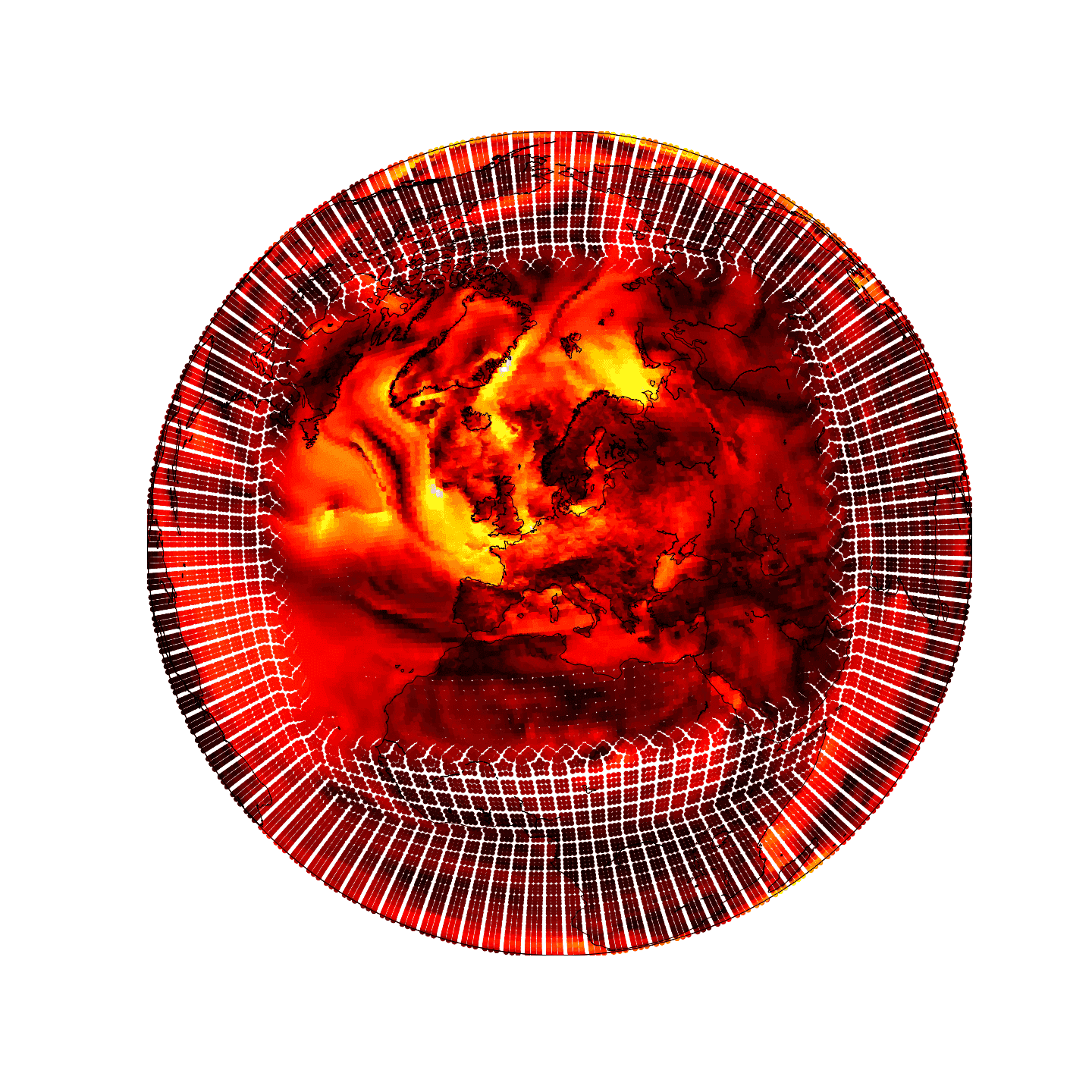
The Climate Science workbench is a comprehensive set of analysis tools and consolidated workflows. The workbench is based on the Galaxy framework, which guarantees simple access, easy extension, flexible adaption to personal and security needs, and sophisticated analyses independent of command-line knowledge.
The current implementation comprises a few tools dedicated to different research areas of climate science. More tools are coming soon!
The list of tools is maintained by Anne!!!
Content
Get started
Are you new to Galaxy, or returning after a long time, and looking for help to get started? Take a guided tour through Galaxy’s user interface.
Training
Want to learn more about Galaxy? Check out the following hands-on tutorials from the Galaxy Training Network.
We are passionate about training. So we are working in close collaboration with the Galaxy Training Network (GTN) to develop training materials of data analyses based on Galaxy (Batut et al. 2017). These materials hosted on the GTN GitHub repository are available online at https://training.galaxyproject.org.
Available tools
Interactive tools
- Panoply netCDF viewer
- JupyterLab for Ocean / Atmosphere / Land / Climate Pangeo Python ecosystem with:
- PANGEO python ecosystem: PANGEO is a community platform for Big Data geoscience;
- Community Earth System Models (CESM) development & Training platform: The Community Earth System Model (CESM) is a fully-coupled, global climate model that provides state-of-the-art computer simulations of the Earth’s past, present, and future climate states.
- ESMValTool: a community diagnostic and performance metrics tool for routine evaluation of Earth system models in the Coupled Model Intercomparison Project (CMIP). The JupyterLab ESMValTool environment can be used for developing new diagnostic recipes and as a teaching platform.
Climate Analysis
| Tool | Description | Reference |
|---|---|---|
| cds_essential_variability | Copernicus Essential climate variables for assessment of climate variability from 1979 to present | - |
| shyft_longitudes | Shift longitude range in netCDF data file from 0->360 to -180->180 degrees | - |
| psy_maps | Visualization on a geographical map with psyplot | - |
| mean_per_zone | Plot zonal statistics from a raster and shapefile on a geographical map | - |
GIS data handling
Machine Learning Workbench
For Machine Learning tools, use the Galaxy Machine Learning Workbench. To have access to all your Galaxy histories and data, make sure to login with the same username and password than on the Climate Science Workbench.
Acknowledgments
The authors would like to thank Bérénice Batut, Björn Grüning, Anup Kumar and @galaxyproject
Citation
Please add the following when using the climate.usegalaxy.eu Galaxy portal:
The Galaxy server that was used for some calculations is in part funded by Collaborative Research Centre 992 Medical Epigenetics (DFG grant SFB 992/1 2012) and German Federal Ministry of Education and Research (BMBF grants 031 A538A/A538C RBC, 031L0101B/031L0101C de.NBI-epi, 031L0106 de.STAIR (de.NBI)).
More information on how to cite Galaxy.
Our Data Policy
| Registered Users | Unregistered Users | FTP Data | GDPR Compliance |
|---|---|---|---|
| For all different storage options, for detailed explanations of data retention policies, and ways how to increase your quota please refer to our dedicated storage site. | Processed data will only be accessible during one browser session, using a cookie to identify your data. This cookie is not used for any other purposes (e.g. tracking or analytics). If UseGalaxy.eu service is not accessed for 90 days, those datasets will be permanently deleted. | Any user data uploaded to our FTP server should be imported into Galaxy as soon as possible. Data left in FTP folders for more than 3 months, will be deleted. | The Galaxy service complies with the EU General Data Protection Regulation (GDPR). You can read more about this on our Terms and Conditions. |