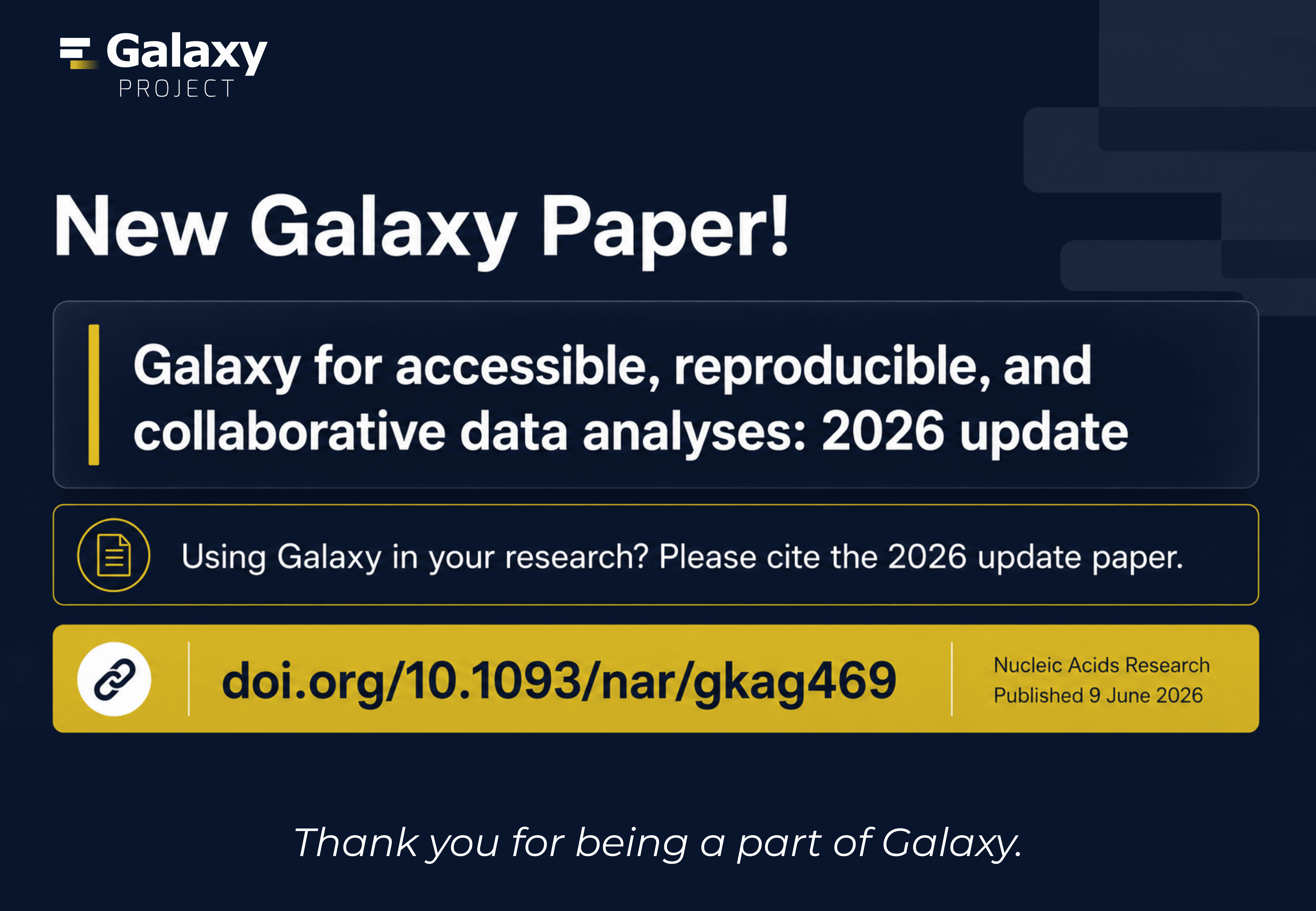
“Anyone, anywhere in the world should have free, unhindered access to not just my research, but to the research of every great and enquiring mind across the spectrum of human understanding.” – Prof. Stephen Hawking
- Galaxy Europe Goes Ocean: Ready for Ocean Hackathon 2026! 48 hours, ocean data and fresh ideas! Galaxy Europe's Earth System Sciences platform joins the Ocean Hackathon adventure.
- ESG4Stars project launched Efficient start of the ESG4Stars project with kick-off meeting, general assembly and first collaborative working days all in one week
- LangChain Text Splitters, the Missing Link when Processing Long Texts with LLMs Circumvent context window limits of LLMs by splitting long texts into manageable chunks
- AI4SOCIAL+ Online Kickoff AI4SOCIAL+ project kickoff meeting on 1st October 2026 online
- BioFAIR Data to Discovery Single-Cell Training and CoFest Highlights from a single-cell event in the UK and future opportunities to get involved with SPOC and BioFAIR.
- Galaxy Beyond Basics: Mastering Workflows, Automation, and Scalability Oct 12 - Oct 16 · Paris, FranceJoin us for an **intensive, week-long, in-person training** designed to elevate your Galaxy expertise to new heights
- Workshop: Sustainable research computing with Galaxy: Workflows, infrastructure and practice Nov 19 - Nov 20Two-day workshop in Madrid exploring how research workflows can be made more sustainable (19-20 November). Registration open now
- Galaxy and AI in small subjects Nov 19 - Nov 20 · Mainz
- Introduction to the Data Analysis Platform Galaxy (in German) Dec 2 · Freiburg, Germany
- Workshop on high-throughput sequencing data analysis with Galaxy Mar 1 - Mar 5 · Freiburg im Breisgau, GermanyThis course introduces scientists to the data analysis platform Galaxy
The European Galaxy server
The European Galaxy server UseGalaxy.eu is maintained primarily by the Freiburg Galaxy Team in collaboration with academic groups across Europe and the US Galaxy team. Please check our Terms of Service and data retention policy before using the server. We offer thousands of tools, temporary quota increases, and compute infrastructure for trainers through Training Infrastructure as a Service (TIaaS). If you have used our services for your research, please cite us.
Galaxy Europe sections
Projects
The European Galaxy community participates in projects at European, national, and regional levels.
 See all projects
Communities
Customized Galaxy front pages support scientific and local communities across Europe.
 Browse subdomains
Citations
Who has used the European Galaxy server for data analysis? Check out the list of publications here.
 View publications
Team
The European Galaxy team is distributed across countries, institutes, and community sites.
 Meet the team
Our Data Policy
| Registered Users | Unregistered Users | FTP Data | GDPR Compliance |
|---|---|---|---|
| For all different storage options, for detailed explanations of data retention policies, and ways how to increase your quota please refer to our dedicated storage site. | Processed data will only be accessible during one browser session, using a cookie to identify your data. This cookie is not used for any other purposes (e.g. tracking or analytics). If UseGalaxy.eu service is not accessed for 90 days, those datasets will be permanently deleted. | Any user data uploaded to our FTP server should be imported into Galaxy as soon as possible. Data left in FTP folders for more than 3 months, will be deleted. | The Galaxy service complies with the EU General Data Protection Regulation (GDPR). You can read more about this on our Terms and Conditions. |