
Galaxy at the EOSC Symposium 2026: Federated Workflows in Practice
A Galaxy-centric report from the EOSC symposium in Florence.
Around 500 people from 35 countries joined the EOSC Symposium 2026 in Florence from 14 to 16 October. The Freiburg Team of Galaxy Europe directly contributes to the (candidate, as of writing) EOSC Nodes Germany and Life Sciences Connect, and was represented this time by Pavan and Wolfgang. Both were happy to meet Galaxy community members Marie, Anne and Sanjay there.
For a complete overview of the event we recommend you to study the event programme and the official post-event summary.
Here we are taking a very Galaxy-centric look at the meeting.
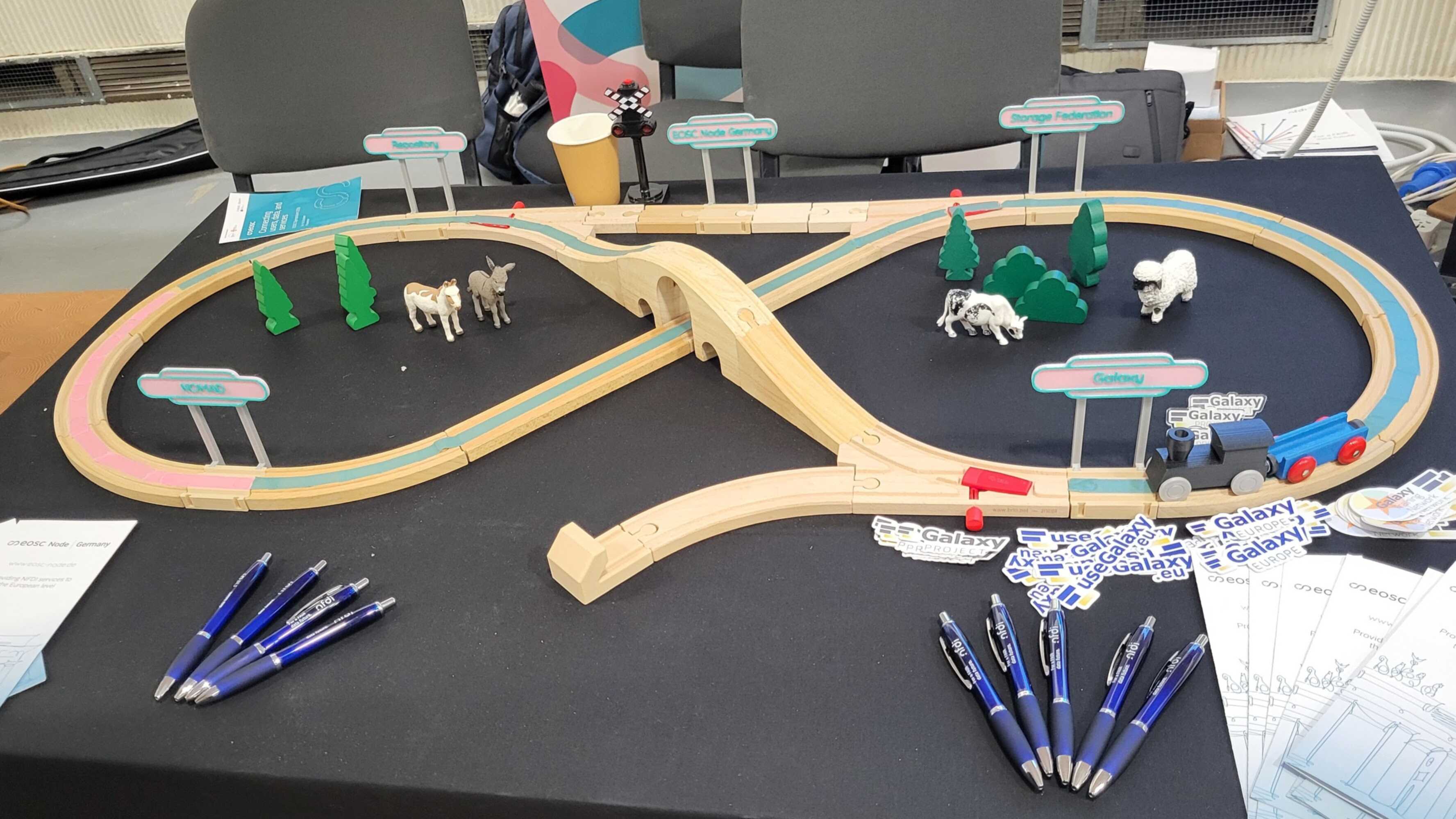
Throughout the meeting, Wolfgang and Pavan supported the teams at the EOSC Node Germany and EOSC Node Life Sciences Connect booths in answering Galaxy-specific questions.
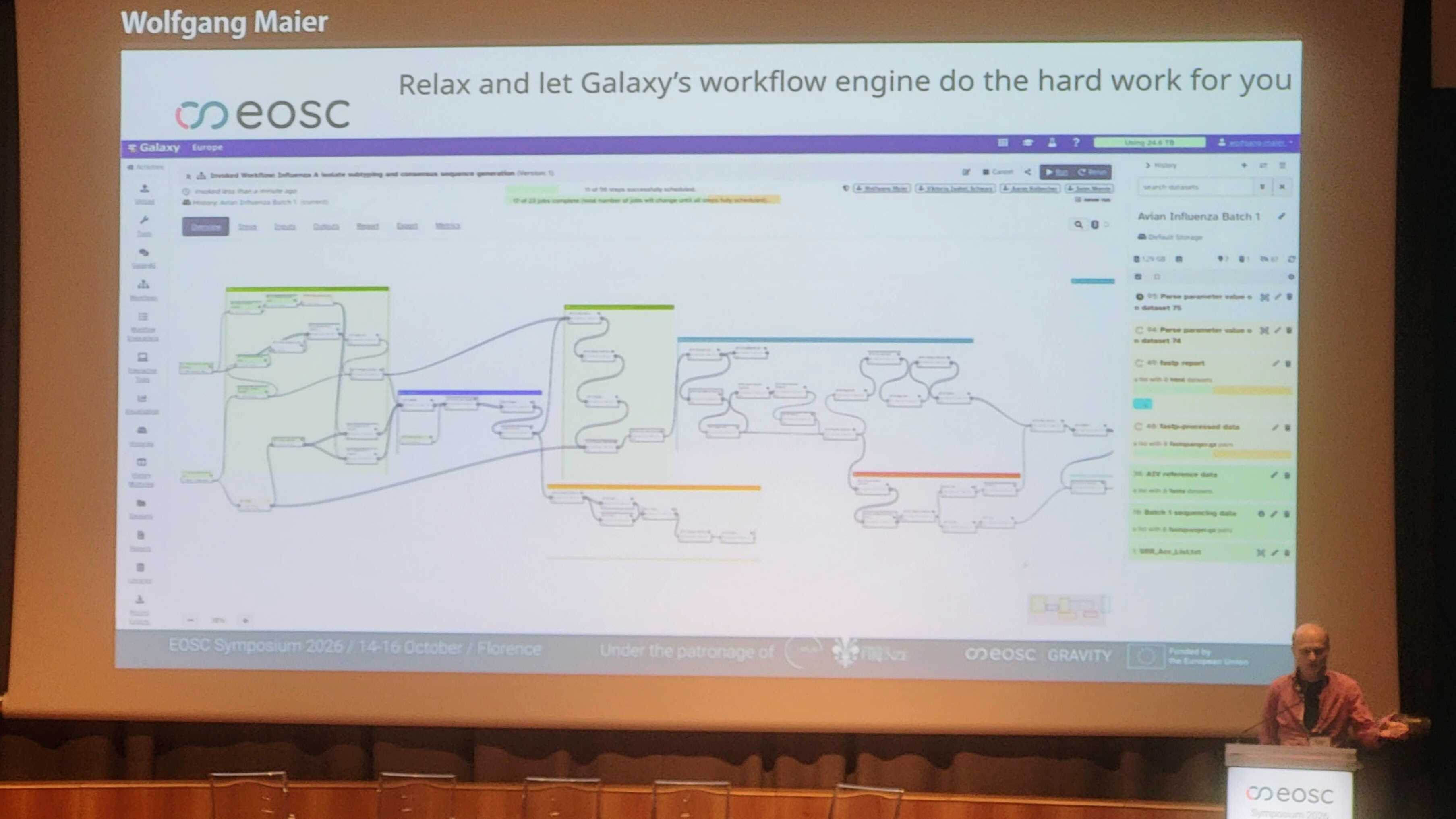
On the second day, Wolfgang gave a short talk about Galaxy within Life Sciences Connect and how the connection of Galaxy to other EOSC services makes it possible to build ready-to-use applications of public interest. The specific example he showcased was Galaxy Europe’s scalable offer of an Avian Influenza viral genome monitoring system that relies on Zenodo-hosted reference data and workflow-importing from WorkflowHub for getting anyone with a need for it started in minutes. You can learn more about this specific topic at our page: Solutions for Virology - Avian influenza
The Galaxy project in Europe, however, is more than just the parts of Galaxy Europe maintained in Freiburg - and has become an integral part of EOSC at several levels. EOSC nodes that presented Galaxy as part of their portfolio of services include the national node of Czechia and the thematic node Data Terra.
Galaxy was also presented as a partner in the new EOSC project AI4Social+. Our team in Freiburg is directly involved in this project - just as in the recently started EOSC-MESH project.
Last but not least, Anne, in her talk: “Give Us a Home: What Research Communities Need from EOSC”, mentioned Galaxy as a positive example of a project with a functioning community. To the extent that we have contributed to the growth of this community, we are especially proud of this. Thank you for being part of it!